








What Makes an Object Worth Keeping for Years
How to tell which pieces are built to stay, before the next purchase.
Written by Janeca Racho, 54kibo Contributor
Reviewed by Sarah Medina, 54kibo Editorial Manager

A home tells you what is staying before you consciously decide it. A few months in, some pieces already feel temporary, easy to picture replacing, while one or two have quietly become fixed points you would not think to move. You did not plan it that way. It happened through use. Some objects settle into the rhythm of a home so naturally that you only notice how much they held once they are gone.
That gap is worth paying attention to because it exposes a hard truth about buying: how a piece looks the day it arrives does not predict whether it will still matter in five years. The pressure to know a piece is right before you buy it is part of what makes the decision stressful, and part of what leads to regret. One of the hardest parts of choosing well is accepting that certainty rarely exists at the start. Some decisions only become clear through time and repeated use.
But you can read the signs earlier than you might think. The pieces that end up worth keeping tend to share a few traits, and those traits are visible at the point of purchase if you know what to look for. This is a guide to telling the difference before the next purchase, not after.
________________________________________________________________________________________________
Worth keeping is not a price point and it is not a look. A thing does not become lasting because it was expensive or because it photographs well. It becomes lasting through the combination of how it is made and what it comes to mean, proven over time by continued life with the object. Those two halves, the making and the meaning, are what the rest of this guide breaks down.
Telling lasting pieces from temporary ones is one part of a larger approach to quality, craft, and investment — explored in full in our guide to Quality, Craft & Investment.
________________________________________________________________________________________________
The 54kibo Definition of Heirloom Quality
Most quality standards stop at how well a thing is built. That covers half of what matters and misses the half that decides whether a piece is worth passing down.
A piece is heirloom-quality when three things hold: the material can age (solid, natural, repairable), the making can be traced (a maker, a technique, a place), and the meaning can transfer (a story the next person can inherit).
The first two are where most well-made furniture competes, and they matter. But the third is the one that separates a piece that lasts from a piece worth keeping. An object that can carry a story to the person who receives it next has something a flawless slab of joinery does not. It is the difference between something durable and something inheritable.
How that meaning accrues in the first place, gathered through years of ordinary use, is the subject of How Objects Gain Meaning Over Time, which links back here through its own heirlooms section.
This is also where craft traditions with a traceable hand hold an advantage that mass production cannot reach. When a piece carries a maker, a technique, and a place, its making is legible in the object itself, and that legibility is part of what the next person inherits along with it.
What Makes Furniture Worth Keeping
Five things tell you, at the point of purchase, whether a piece has a long life in it.
Material that ages rather than wears out. Solid natural materials change as they live: wood deepens, fiber softens, metal patinas. Synthetic and veneered materials do not age, they degrade, and there is no recovering them once they do. Ask whether the material in front of you will look better in ten years or simply older.
Construction you can name. A keepable piece is made by a method you can identify: hand-coiled, hand-woven, carved, joined, beaded over a frame. If how a thing is held together is legible, it can usually be understood, maintained, and respected. If you cannot tell how it was made, you usually cannot tell how it will fail.
Repairability. Things that last are things that can be mended. A handwoven surface can be rewoven, a carved frame can be refinished, a beaded panel can be restrung. Pieces designed so that no part can be addressed are designed to be discarded.
Provenance. A piece with a known origin, a maker, a region, a tradition, is a piece whose story is already partly told. Provenance is not a luxury detail. It is the raw material of the meaning that transfers.
The meaning test. The simplest version: would this still matter to you if no one else ever saw it. A piece that passes is a piece you keep for your own life with it, not for how it reads to a room. Those are the ones that tend to stay.
Heirloom Quality, Across Categories
Heirloom quality is easiest to recognize when you can see the maker's hand in the object. A few categories carry that hand especially clearly.
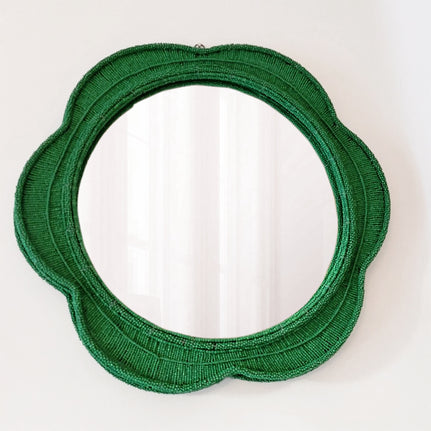
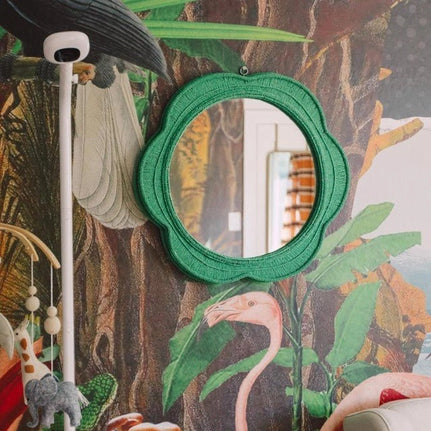
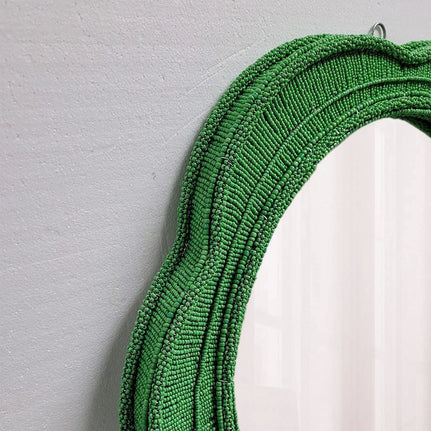
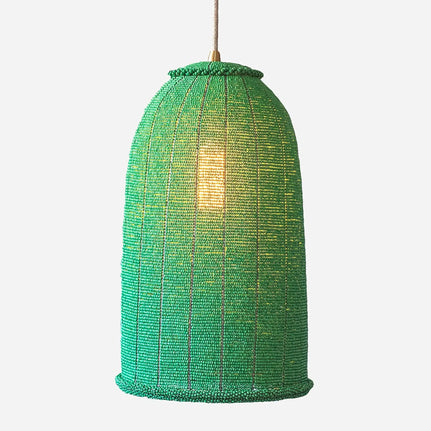
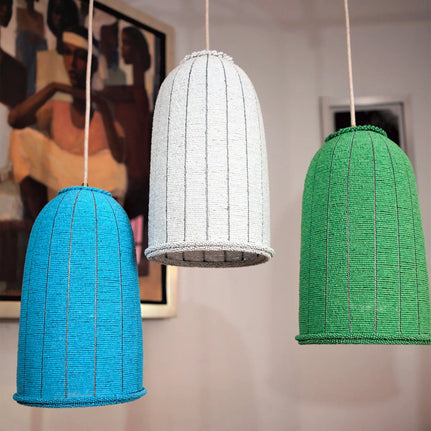
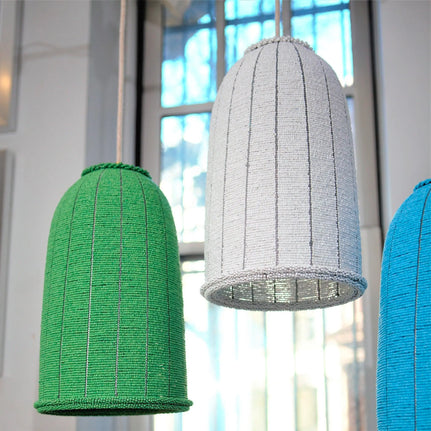
Beadwork over a frame. In the Naka collection, fine glass beads are woven over a wire frame by master beadsmiths in South Africa, working from a beadwork practice refined across generations and designed in Brooklyn. On a beaded mirror or pendant, the surface is not applied decoration, it is the structure: thousands of individual glass beads carrying the color and catching light. A surface made bead by bead is a surface that can be restrung and kept.
Carved and glass beaded seating. The Bamileke stool comes from the Grassfields tradition of Cameroon: a carved wood form wrapped and beaded by hand, built originally as a prestige seat meant to outlast the person who first owned it. A stool built to be inherited is close to a literal definition of the thing this guide is describing.
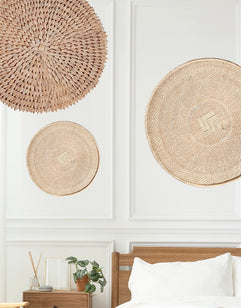
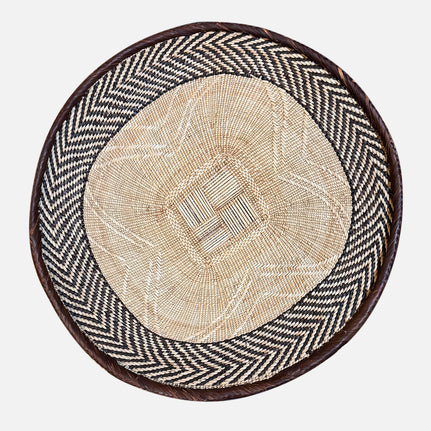
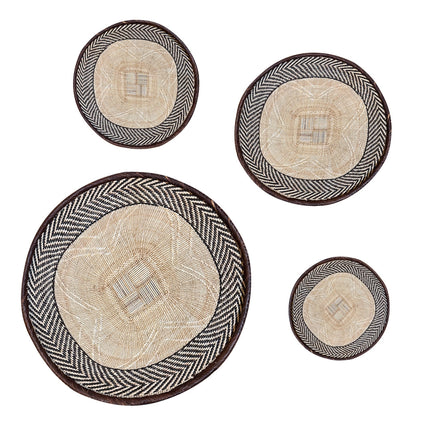
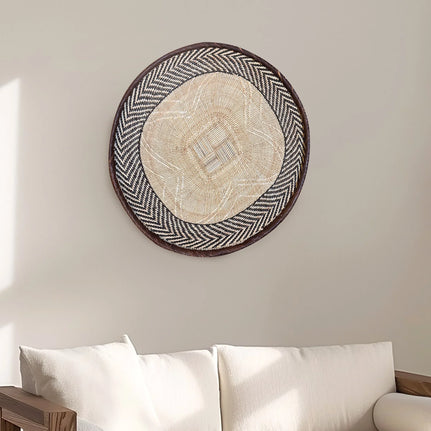
Hand-coiled fiber. The Binga wall basket is hand-coiled in a Tonga basket-weaving tradition, each row worked by hand into the next. A coiled Ilala palm basket can be rewoven where it wears, and its making is visible in every row, which is exactly the traceability the definition asks for.
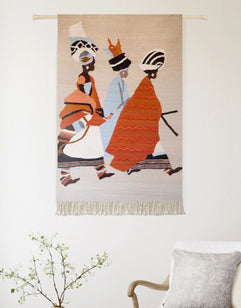
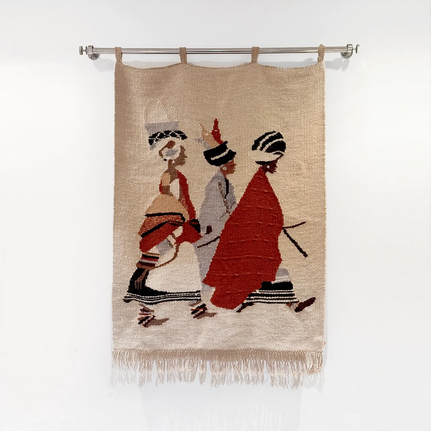
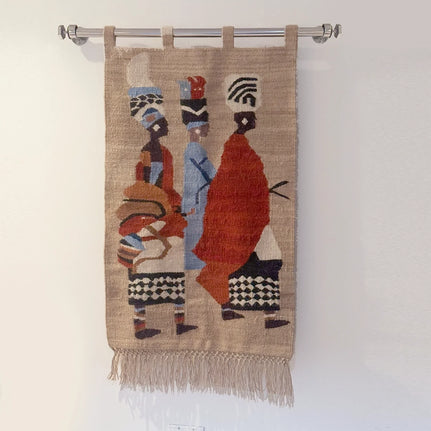
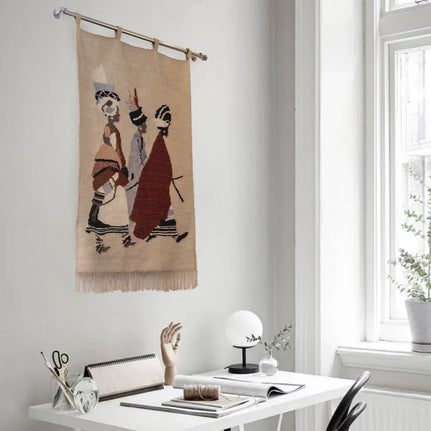
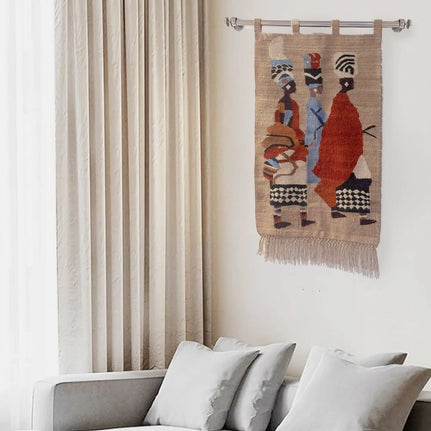
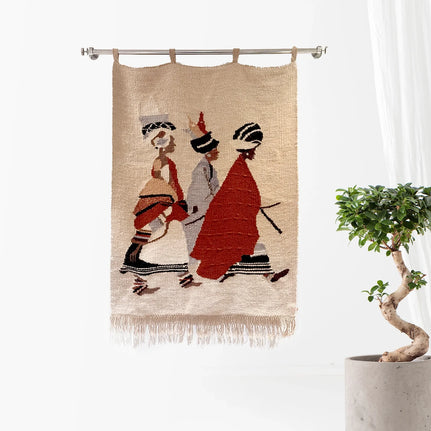
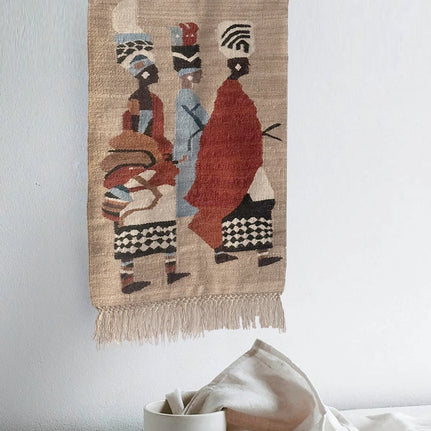
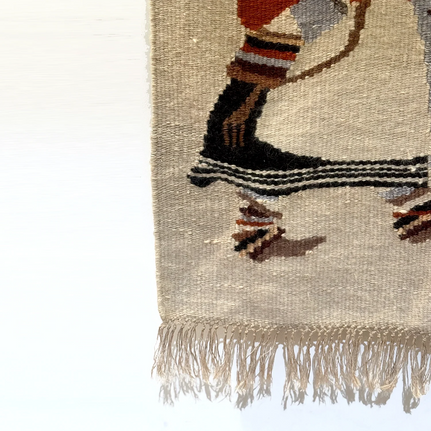
Handwoven textile. The Three Xhosa Ladies tapestry is handwoven as a single narrative panel. The mohair woven textile wears in rather than out, softening with handling, and carries a depicted story that is itself inheritable.
In each case the material is concrete: glass bead, carved wood, coiled fiber, woven thread. None of these is chosen for how premium it sounds. Each is chosen because you can see how it was made, which is the first thing you can trust about how it will last.
A coiled basket by an entryway, a carved stool moved from room to room, a handwoven panel that softens with the years: these rarely stand out the day they arrive. They earn their place slowly, and the making that is legible in them is part of what lets them keep it.
The Pieces Worth Keeping
Each of these passes the test above: the material ages, the making is traceable, and the object carries a story it can hand forward.
Browse the collection

The curated picks
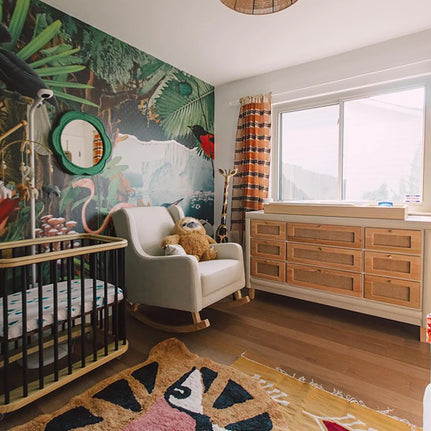
Naka Green Beaded Mirror
Glass beadwork over a frame, South Africa; restringable, traceable, a surface made bead by bead.
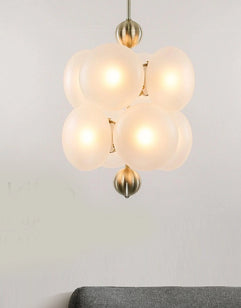
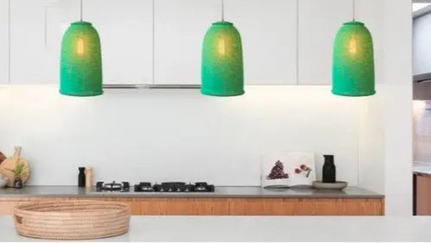
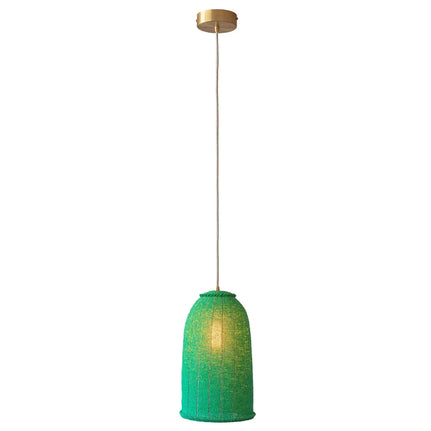
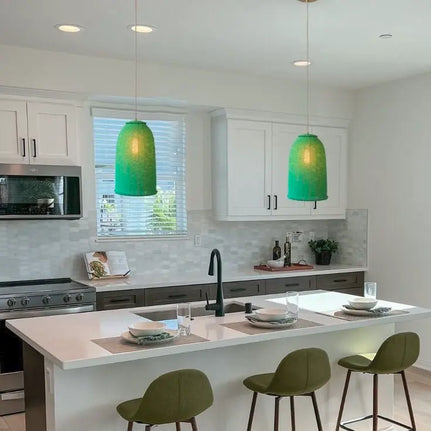
Naka Green Beaded Pendant Light
The mirror's companion in the same beadwork tradition; pairs as a set that ages together.
Binga Wall Basket
Hand-coiled fiber, mendable and legible row by row.


Three Xhosa Ladies Tapestry
A handwoven narrative panel that wears in and carries its own story.

For designers
The five criteria double as specification language. A designer can hand a client this exact test to justify the investment piece over the placeholder, on grounds the client can see rather than take on faith. Learn more about working with 54kibo through our trade program.
________________________________________________________________________________________________
The pieces worth keeping rarely announce themselves on the first day. They reveal themselves slowly, through the years you live with them. Choosing well is mostly a matter of knowing what to look for before you buy, so the pieces you bring home are the ones that earn the right to stay.
For reflections on the spaces and pieces that quietly hold a life, receive future essays below.
________________________________________________________________________________________________
Continue Reading

Janeca is a trained journalist and storyteller with a background in public relations, media, and corporate communications. She now writes freelance, drawn by the freedom to travel and explore her craft. When she’s not writing, she finds inspiration in design styles from around the world, curating boho-meets-coastal pieces for her beachside home.