













Let There Be Warmth: A Modern Guide to Chandeliers by Room and Style
A designer’s framework for selecting lighting that fits your space, not just your taste
Written by Janeca Racho, 54kibo Contributor
Reviewed by Sandra Akufo, Sustainable Designer and Textile Artist
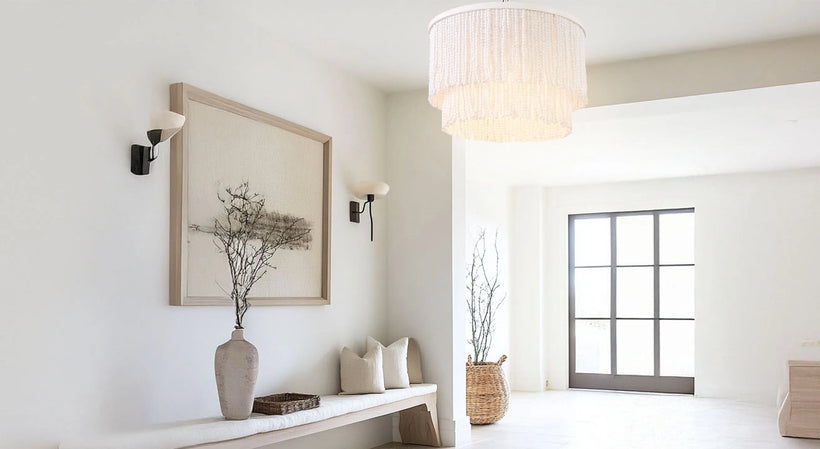
It often starts with a bare bulb hanging from the ceiling long after the rest of the room feels finished. For many homeowners, the chandelier is one of the last decisions made during a renovation or refresh: when everything else is in place, and only the lighting remains unresolved.
Ask any interior designer, and they’ll tell you that a chandelier is more than a light source. It is a centerpiece that defines the mood of a room and quietly tells a story about the home itself. Yet with so many styles, finishes, and sizes available, choosing the right one can feel more complicated than it looks.
Many homeowners begin with style alone. They search for the most beautiful chandelier, the trendiest finish, or the most dramatic silhouette, and only later try to make it fit the room. Often, they bring home a fixture that feels slightly off in scale or disconnected from how the room is actually used. When the process starts this way, even good options become hard to judge. The real difficulty is not finding a beautiful chandelier, but understanding how to choose one that fits the room it is meant to serve.
Let Purpose Lead the Decision
Every successful chandelier choice begins with understanding what role the light is meant to play. Some homeowners equate “statement lighting” with choosing the boldest possible fixture. But sustainable designer and textile artist Sandra Akufo cautions against making scale and style decisions in isolation.
“Homeowners often make the mistake of choosing a chandelier based solely on its aesthetic without considering whether the chandelier is too big or too small, or too simple or too elaborate for the size and character of the room they intend to place it in,” she explains. “Statement pieces are meant to draw attention but not necessarily overpower or dominate a space.”
Before thinking about finishes or silhouettes, Akufo suggests clarifying intent as purpose ultimately determines everything that follows. A dining room chandelier, for example, often needs presence and symmetry, a bedroom chandelier needs softness and restraint, while an entryway chandelier needs clarity and impact.

Use Proportion as Your Primary Guide
A crystal chandelier can feel elegant and timeless when it complements the room’s architecture, but heavy and theatrical when it overwhelms a low ceiling. Beaded chandeliers and boho chandeliers add warmth and texture when proportions are right, but feel cluttered when compressed into tight spaces. In other words, scale is the quiet factor that makes or breaks chandelier selection.
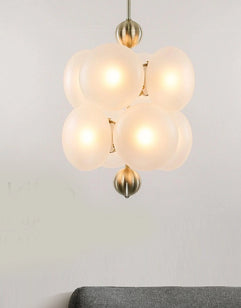
Modern bubble chandeliers and drum chandeliers rely even more on proportion. Their sculptural forms are only effective when they echo the room’s existing lines and volume.
Akufo offers a practical framework for placement. In rooms with standard eight-foot ceilings, she notes that the bottom of a chandelier should typically hang about two and a half to three feet above the surface below, whether that is a table, island, or counter. This range allows the fixture to cast focused light without blocking sightlines or overwhelming the space.
For higher ceilings, she adjusts proportion accordingly. “The bottom line is: the bigger the room and the higher the ceilings (or the more clearance between ceiling and floor), the more visual and physical space you have to work with, which means you can go for a larger chandelier and hang it a bit lower,” she adds.
Let Material and Mood Shape Style
Once purpose and proportion are clear, material becomes the main design language, and Akufo encourages homeowners to begin with mood. “Are you going for a warm and cozy vibe (think brass or gold finishes) or something cool-toned and sleek (like chrome or matte black)? From there, let your home’s overall aesthetic guide your selection, whether it leans modern, minimalist, boho, or luxe.”
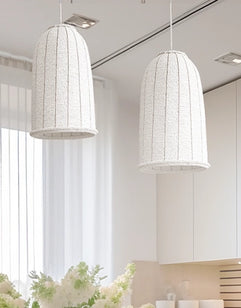
Likewise, different chandelier styles communicate different emotional tones. Crystal chandeliers bring formality and lightness, making them well-suited for dining rooms, staircases, and rooms with architectural detail. Beaded chandeliers and boho chandeliers introduce texture and softness, ideal for bedrooms, living rooms, and coastal interiors.
Rustic chandeliers ground a space through wood, metal, and natural finishes. Bubble chandeliers and drum chandeliers bring graphic clarity to modern spaces, often serving as sculptural anchors rather than decorative accents.
Regardless of which style or material you choose, the goal is not to match fixtures with the space literally, but to align material, finish, and silhouette with the atmosphere you want the room to hold.

How These Principles Shape Each Room
Across every room, the same principles apply: purpose first, proportion second, material third. In the dining room, symmetry and scale lead. Linear chandeliers and chandelier bars work well over long tables, while crystal chandeliers or brass finishes add refinement against natural materials like wood and linen.
In the living room, placement matters more than centering. Positioning the chandelier above the main seating area helps anchor the layout, with globe chandeliers introducing modern drama and rustic chandeliers softening spaces with beams or textured walls.
On the other hand, restraint is essential in the bedroom, while ensuring. scale stays in proportion to ceiling height. Farmhouse chandeliers bring relaxed charm, coastal chandeliers keep the mood airy, and flush mount chandeliers offer presence without overwhelming lower ceilings.
Transitional spaces benefit from intention as well. Entryway chandeliers shape first impressions, while staircase chandeliers guide the eye vertically and visually connect floors. Bathroom chandeliers, especially above freestanding tubs or vanities, soften shadows and shift the space from purely functional to restorative.
Turning Principles into Confident Choices
Choosing a chandelier well rarely comes down to a single rule. It comes from reading the room—its scale, its use, its proportions—and letting those conditions narrow the field.
When those elements are considered first, the decision tends to feel less uncertain and more deliberate. Over time, this way of working makes lighting choices feel less like guesses and more like informed judgments.
Continue Reading
If this resonates, the following articles explore related lighting decisions you may find helpful.
Illuminate with Style: A Guide to Light Fixtures by Material and Style

Janeca
Writer
Janeca is a trained journalist and storyteller with a background in public relations, media, and corporate communications. She now writes freelance, drawn by the freedom to travel and explore her craft. When she’s not writing, she finds inspiration in design styles from around the world, curating boho-meets-coastal pieces for her beachside home.






Comments